The Aristocracy of the Air: The Nunnally Dynasty and the Aviation History of Georgia
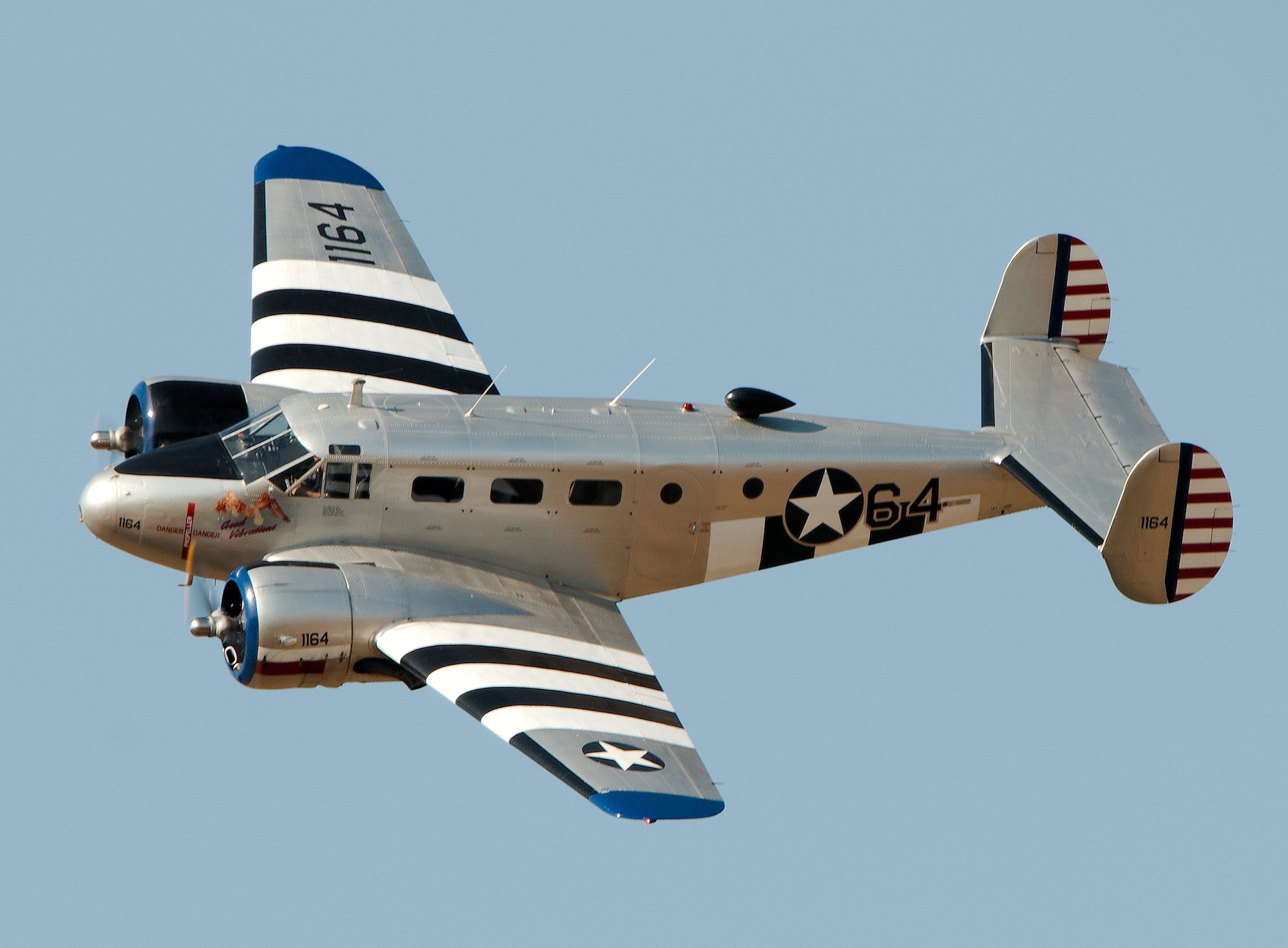
Beechcraft D18S NC80333 owned by Winship Nunnally 1947
The history of aviation in the American South is frequently recounted through the lens of corporate entities—Delta Airlines, Lockheed Martin, and the municipal developments of Hartsfield-Jackson International Airport. However, parallel to this institutional history runs a quieter, yet equally potent, narrative of dynastic influence. The Nunnally family, scions of a confectionery empire and entrenched pillars of Georgia’s "Old Money" elite, leveraged their capital, political connections, and personal daring to shape the state’s aerospace trajectory. From the founding of the Atlanta Aircraft Corporation in the fledgling days of 1929 to the anti-submarine patrols of World War II, and finally to the grassroots general aviation of the 21st century, the Nunnallys have maintained a continuous, century-long engagement with flight. This report provides an exhaustive examination of the family’s aviation activities, specifically isolating their direct ownership of aircraft, their influence on air route development, and the socio-economic implications of their transition from industrial magnates to aviation patrons.
The Foundations of Privilege and Power
The Architecture of "Old Money" in the New South
To fully comprehend the Nunnally family's capacity to influence aviation, one must first deconstruct the source of their influence. In the lexicon of Southern society, "Old Money" refers not merely to the age of the fortune, but to its integration into the social fabric of the region’s aristocracy. The Nunnally wealth originated with James Hilliard Nunnally, who founded the Nunnally Candy Company in 1884. This venture was not a provincial operation; it was a commercial juggernaut that introduced boxed chocolates to the Southern market, generating a surplus of capital that required diversification.
However, the true solidity of the Nunnally position—and their ability to sustain expensive technological pursuits like aviation—derived from their familial proximity to the Woodruff dynasty. Cora Winship Nunnally, the wife of the patriarch James, was a cousin of the Woodruffs, the architects of the Coca-Cola Company’s global dominance. This bloodline connection placed the Nunnallys at the epicenter of Atlanta’s power structure. They were not merely wealthy; they were insiders in the "Trust Company of Georgia" complex, a network of families that controlled the flow of credit and industrial development in the state. This financial bedrock is the critical context for their aviation activities; when Winship Nunnally later purchased executive aircraft or bankrolled manufacturing plants, he did so with the assurance of a capital reserve that few contemporaries could match.
The Generational Pivot: From Confectionery to Aeronautics
The trajectory of the family changed decisively with the ascent of George Winship Nunnally (1885-1975). Educated, wealthy, and positioned as the heir to the candy fortune, Winship represented a new breed of Southern industrialist. While his father had built a fortune on the tangible, consumable commodity of sugar, Winship was drawn to the abstract, mechanical promise of the future: speed, connectivity, and flight.
By the late 1920s, the "Old Money" of Atlanta faced a choice. They could retreat into the passive management of their portfolios, or they could actively shape the industrial modernization of the South. Winship Nunnally chose the latter. His entry into aviation was not a hobbyist’s dalliance; it was a strategic deployment of family capital intended to transform Atlanta from a railroad terminus into an aerospace hub. This pivot was fraught with risk—aviation in the 1920s was dangerous and financially volatile—but it demonstrated a willingness to leverage the family’s "Old Money" security to finance "New South" progress.
Part II: Winship Nunnally – The Architect of Southern Skies (1929–1950)
The Atlanta Aircraft Corporation: Industrial Ambition
In 1929, the year that would end in economic calamity, Winship Nunnally made his most significant initial bet on aviation. He became a founding director of the Atlanta Aircraft Corporation. The ambition of this enterprise was stark: to manufacture the first airplane ever produced in Atlanta.
The significance of this venture cannot be overstated. In 1929, aircraft manufacturing was dominated by the Northeast and the West Coast. For a Southern city, still recovering from the long shadow of the post-Civil War agrarian economy, to attempt indigenous aircraft production was an act of industrial defiance. Nunnally’s role was likely that of the financier and corporate guarantor. His presence on the board signaled to other investors that the venture was sound. While the Great Depression would eventually throttle the market for new aircraft, forcing the dissolution or restructuring of many such startup firms, the existence of the Atlanta Aircraft Corporation proved that the Nunnallys viewed aviation as a production industry, not just a transportation novelty. They were attempting to build the "Detroit of the South" in Atlanta, centered on the wing rather than the wheel.
The Diplomat of the Air: The Chamber of Commerce Years
Following the manufacturing phase, Winship Nunnally shifted his focus to infrastructure and logistics. As the Governor of the Georgia chapter of the National Aeronautics Association (NAA) from 1931 to 1933, and subsequently as the head of the Aviation Committee of the Atlanta Chamber of Commerce, he effectively served as the state’s unappointed Secretary of Air.
His tenure was characterized by an aggressive campaign for route expansion. In the 1930s, an airport was useless without certified airmail and passenger routes awarded by the federal government. Nunnally utilized his business acumen and political connections to lobby for Atlanta’s inclusion in the national network. His success was quantitative and transformative:
Expansion of Capacity: Under his leadership, the number of directions flown out of Candler Field (now Hartsfield-Jackson) rose to a record ten.
Strategic Routes: He secured specific routes that integrated the agrarian South with the industrial North and Midwest.
Delta Airlines: He won routes connecting Atlanta to Knoxville, Lexington, and Cincinnati. This linked the Nunnallys' home base with the industrial coal and steel belt.
Eastern Airlines: He secured the St. Louis connection, opening the gateway to the West.
Pennsylvania Central: Routes to Pittsburgh and Birmingham were established, cementing the link between Atlanta’s finance capital and the steel capitals of America.
The Sea Island Connection: Routing for the Aristocracy
Perhaps the most telling detail of Nunnally’s route campaigning was his insistence on extending the Delta route from Atlanta to Savannah and, crucially, "all the way to Sea Island." This specific objective unveils the intersection of public utility and private privilege.
Sea Island was not a commercial hub; it was a resort enclave for the ultrarich, inhabited by the Cloister Hotel and the private estates of families like the Rockefellers, the Vanderbilts, and the Nunnallys themselves. By campaigning for commercial air service to this location, Winship Nunnally was not merely serving the flying public; he was constructing an air bridge for his own social class. He sought to reduce the travel time between the boardrooms of Atlanta and the golf courses of the coast, facilitating the "dual-residency" lifestyle that defined the mid-century elite. This effort underscores how the Nunnallys viewed aviation: as a tool to shrink geography to fit their lifestyle.
The Private Fleet – Aircraft of the Nunnally Dynasty
The user’s query explicitly seeks information regarding the family’s ownership of aircraft. The historical record confirms that the Nunnallys were not merely passengers on the airlines they helped govern; they were owner-operators of significant, high-capability aircraft. These machines were the tools of their trade and the toys of their leisure.
The Beechcraft Model 18 (D18S)
The crown jewel of Winship Nunnally’s post-war fleet was the Beechcraft D18S. This aircraft represents the pinnacle of 1940s corporate transport—a "heavy iron" machine that signaled immense status and capability.
Aircraft Profile and Provenance
Registration: NC80333
Manufacturer: Beech Aircraft Corporation
Model: D18S (The "Twin Beech")
Acquisition Year: 1947
Disposal Year: Circa 1952 (Sold to Zantop Flying Service)
Owner of Record: Winship Nunnally, Atlanta, GA.
Technical Specifications and Capabilities
The D18S was powered by two Pratt & Whitney R-985 Wasp Junior radial engines, producing 450 horsepower each. It had a cruising speed of approximately 220 mph and a range of nearly 1,000 miles. It featured a taildragger landing gear configuration and a twin-tail design that became iconic.
Operational Context and "Old Money" Utility
Owning a Twin Beech in 1947 was the equivalent of owning a large private jet today. It required a professional pilot (or a very highly skilled owner-pilot) and substantial maintenance infrastructure.
The Commute: For Winship Nunnally, this aircraft solved the "Sea Island Problem." The drive from Atlanta to the coast in the 1940s was a grueling affair on two-lane roads. The train was comfortable but rigid in schedule. The Beech 18 could fly from Atlanta to the coastal airstrip at McKinnon Field in just over an hour.
Corporate Projection: As a Director of Delta Airlines (elected 1947), arriving in a private Beech 18 reinforced Nunnally’s status as a peer to the airline executives. It demonstrated that he understood the operational realities of twin-engine flight.
Fate of the Airframe: The fact that the aircraft was sold to Zantop Flying Service—a company known for hauling auto parts and critical cargo—speaks to the robust condition of the Nunnally maintenance. It was a working machine, not a hangar queen.
The Grumman G-44 Widgeon
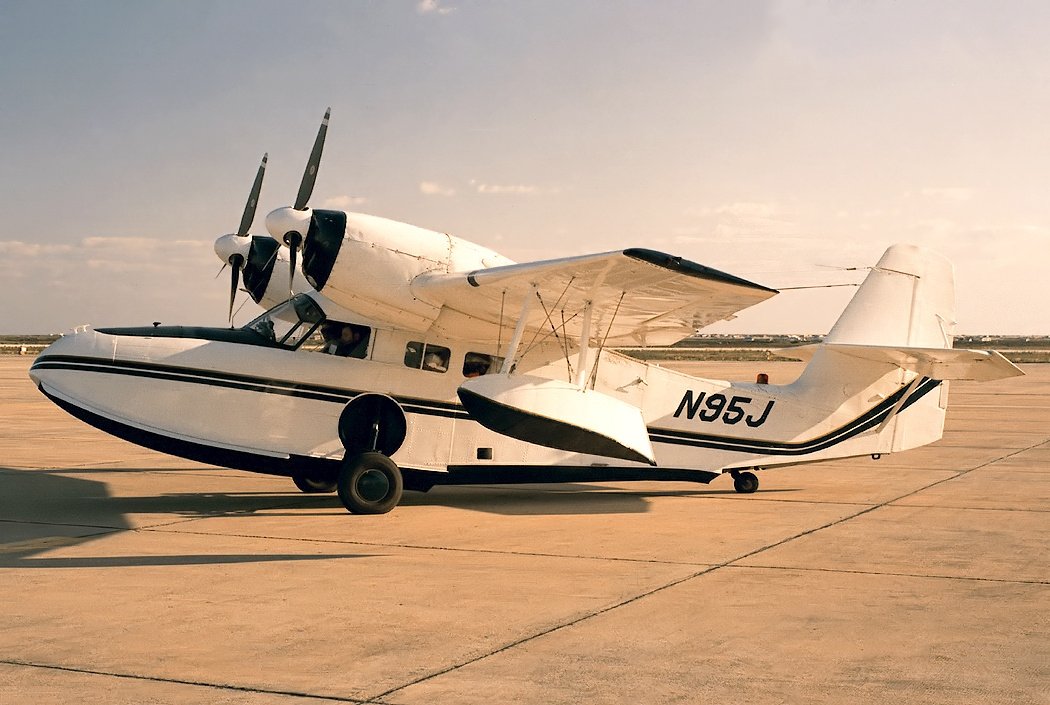
Grumman G-44 Widgeon amphibious aircraft Sea Island Georgia
If the Beech 18 was the corporate boardroom in the sky, the Grumman Widgeon was the family’s flying yacht. Records identify Winship Nunnally as an owner of this small, twin-engine amphibian.
The Amphibious Advantage
Model: Grumman G-44 Widgeon
Configuration: High-wing flying boat with retractable landing gear.
Engines: Two Ranger L-440 inverted inline-6 engines (200 hp each).
The Sea Island Lifestyle Fit
The Widgeon was uniquely suited to the geography of the Georgia coast. While Sea Island had access to McKinnon Field, the broader expanse of the "Golden Isles"—including Cumberland, Ossabaw, and the marshes of Glynn—was often inaccessible by road. An amphibian allowed the Nunnallys to land directly on the water in the sounds and rivers adjacent to their properties or the properties of their friends.
Leisure and Sport: The Widgeon was frequently used by wealthy sportsmen for fishing trips and hunting expeditions in the remote marshes. For a family of "Old Money" hunters and socialites, the Widgeon was the ultimate accessory, blending the utility of a boat with the speed of an aircraft.
The Hi-Max (Cy Nunnally)
Moving into the modern era, the nature of the family’s aircraft ownership shifted from heavy corporate transport to enthusiast-grade experimental aviation.
Aircraft: Team Hi-Max
Type: Single-seat, high-wing, amateur-built experimental aircraft.
Construction: Wood and fabric.
Engine: Modified Subaru automotive engine (in the specific airframe involved in the 2019 accident).
Significance: This aircraft represents a departure from the "checkbook aviation" of the mid-century. The Hi-Max is a "stick-and-rudder" airplane, requiring intimate mechanical knowledge and piloting skill. Its ownership by Cy Nunnally (or his custody of it for testing) reflects a hands-on dedication to the pure mechanics of flight, far removed from the luxury of the Twin Beech.
The Cozy MK IV (Hugh Nunnally Farrior)
Tracing the lineage to the present day, we identify Hugh Nunnally Farrior, a descendant carrying the family name, as the registered owner of a high-performance homebuilt.
Registration: N222HF
Model: Cozy MK IV
Type: 4-seat, single-engine, pusher-propeller, canard design (Rutan derivative).
Status: Registered/Reserved.
Implication: The Cozy MK IV is a complex, high-speed cross-country cruiser. It is built from composites (fiberglass/epoxy). Its ownership suggests that the "aviation gene" in the Nunnally bloodline has evolved into a sophisticated appreciation for aerodynamics and experimental engineering. Unlike the "Old Money" purchase of a factory-new Beech, building or owning a Cozy implies a deep technical engagement with the aviation community.
Inventory of Nunnally Associated Aircraft
Associated Owner
Aircraft Model
Reg. Number
Role/Type
Era
Significance
Winship Nunnally
Beechcraft D18S
NC80333
Executive Transport
1947–1952
The "Corporate Shuttle" for the Atlanta-Sea Island commute.
Winship Nunnally
Grumman G-44
Unknown
Amphibian Utility
1940s
Coastal access; "Flying Yacht" for the Golden Isles.
Cy Nunnally
Team Hi-Max
Unregistered
Experimental
2019 (Fatal)
Representative of grassroots/enthusiast aviation.
Hugh N. Farrior
Cozy MK IV
N222HF
Experimental Tourer
2020s
Modern high-performance homebuilt; continued legacy.
Fair Weather Flights
Various
N/A
FBO Fleet
2004–2019
Training and rental fleet operated by Cy Nunnally.
The War at Home – The Nunnallys and the Civil Air Patrol
The Nunnally engagement with aviation was tested by fire during World War II. This period reveals the intersection of their wealth, their aircraft ownership, and their patriotism. Winship Nunnally’s role was not merely administrative; it was operational combat command on the home front.
The U-Boat Threat to the Aristocracy
In 1941 and 1942, the waters off the Georgia coast were a hunting ground for German U-boats (Operation Drumbeat). Merchant tankers leaving oil terminals in the Gulf were torpedoed with alarming frequency. Intelligence reports from the era indicated an even more specific threat: German agents were believed to be monitoring the movements of the industrial elite who wintered at Sea Island, Jekyll Island, and St. Simons. The "Old Money" families were potential targets for assassination or kidnapping to disrupt the American war effort.
Winship Nunnally’s Command
Winship Nunnally was appointed Wing Commander of the Georgia Civil Air Patrol (CAP). He was tasked with organizing the state’s civilian aviation resources to counter this threat.
Mobilization of the Elite: Nunnally’s recruitment strategy relied heavily on his social circle. He called upon the owners of private aircraft—his peers—to volunteer their planes and their time. The "yacht club" set became the "coastal patrol" set.
Coastal Patrol Base 6 (St. Simons Island): Nunnally helped establish this base, which became the nerve center for anti-submarine operations in the region.
Operations: Under Nunnally’s command, civilian pilots flew armed and unarmed patrols over the Atlantic. They escorted merchant convoys, spotted oil slicks and debris, and in some cases, deterred U-boat attacks by their mere presence.
Integration with State Guard: Nunnally also orchestrated the merger of the CAP with the Georgia State Guard, creating a seamless defense force that could respond to coastal landings or sabotage.
Innovation: The Fire Fighting Squadron
Beyond the submarine war, Nunnally utilized his fleet for internal defense. In 1942, realizing that the Forest Service lacked aerial spotting capability, he deployed CAP aircraft to patrol the forests of North Georgia. This led to the creation of a specialized fire-fighting unit. This adaptability demonstrates Nunnally’s view of the airplane as a versatile tool of governance and protection, not just a luxury conveyance.
The Seat of Power – Sea Island and Buckhead
To understand the Nunnallys' aviation habits, one must understand the geography of their lives. Their aircraft were purchased to solve the logistical problem of bridging their two worlds: the power center of Atlanta and the leisure capital of Sea Island.
The Buckhead Estate
In Atlanta, the Nunnallys resided in the exclusive enclave of Buckhead. Their mansion on Blackland Road was a symbol of their dominance in the city’s social hierarchy. This location was a short drive from Candler Field (Atlanta Municipal Airport), where Winship’s Beech 18 would be hangared. The proximity of the estate to the airport was a crucial factor in the feasibility of their aviation lifestyle.
The Sea Island Enclave: "Pine Ridge"
The family’s coastal seat was an estate known as "Pine Ridge" on Sea Island.
Social Context: Sea Island was the winter gathering place for the American industrial aristocracy. The Nunnallys, the Woodruffs, and the Jones family (of Coca-Cola) formed a tight-knit community here.
Aviation as the Gatekeeper: Access to Sea Island was exclusive. By championing the Delta route to the coast and maintaining his own amphibious aircraft, Winship Nunnally ensured that this exclusivity was maintained even as the world modernized. He made the island accessible to his class while bypassing the arduous overland travel that might have democratized access too quickly.
German Espionage: The presence of the Nunnallys and their cohorts at Sea Island was significant enough to attract the attention of German intelligence, validating the strategic importance of the location and the necessity of Nunnally’s CAP patrols.
The Modern Legacy – Cy Nunnally and the Democratization of Flight
As the 20th century gave way to the 21st, the Nunnally aviation legacy underwent a transformation. The "Old Money" corporate approach evolved into a deep, community-based engagement with general aviation, personified by Jason Cyrus "Cy" Nunnally.
The Shift to General Aviation
Cy Nunnally did not run an airline; he ran an airport. As the owner of Fair Weather Flights, LLC, he operated the Fixed Base Operator (FBO) at the Monroe-Walton County Airport.
The Business: An FBO is the service station of the sky. Cy’s business provided fuel, hangars, maintenance, and flight training. This role placed him at the heart of the grassroots aviation community. He was not flying high above the populace in a corporate transport; he was on the ramp, turning wrenches and teaching students.
Community Leadership: Cy’s influence was such that upon his death, the city of Monroe renamed the facility the Cy Nunnally Memorial Airport (D73). This honor is rare and speaks to a profound impact on the local aviation ecosystem.
The Tragedy of the Hi-Max
The narrative of the Nunnallys and aviation is not without its costs. On July 9, 2019, Cy Nunnally was killed in the crash of a Team Hi-Max aircraft at his home airport.
The Accident Sequence: NTSB reports indicate that the aircraft, an experimental amateur-built plane, experienced an engine failure on takeoff. The engine was a converted Subaru automotive engine—a common but complex modification in experimental aviation.
Analysis: The crash underscores the shift in the family’s aviation profile. Winship flew certified, factory-built heavy aircraft maintained by corporate crews. Cy was testing an experimental, home-built machine with a non-aviation engine. This reflects a transition from consumer of aviation to creator/tester of aviation. It demonstrates a passion for the mechanics of flight that transcended safety and status.
The Cy Nunnally Memorial Airport (D73)
Today, the airport bears the name of the family.
Location: Monroe, Georgia.
Role: A general aviation hub for the region east of Atlanta.
Infrastructure: The airport features a 5,000-foot runway and full FBO services, a direct legacy of the improvements championed by Cy Nunnally during his tenure. It serves as a permanent physical monument to the family’s century-long love affair with flight.
Conclusion – A Century on the Wing
The Nunnally family’s history is a testament to the idea that "Old Money" is not static. Through the visionary leadership of Winship Nunnally, the family capital—born of 19th-century candy sales and 20th-century soft drink stock—was transmuted into the infrastructure of the jet age.
They owned the aircraft that defined their eras: the amphibious Widgeons that conquered the coast, the Twin Beeches that mastered the corporate commute, and the experimental homebuilts that pushed the boundaries of personal flight. They did not merely observe the rise of aviation; they financed it through the Atlanta Aircraft Corporation, governed it through the board of Delta Airlines, defended it through the Civil Air Patrol, and ultimately, gave their lives to it on the runways of Monroe.
By stripping away the peripheral narratives of Texas and other branches, the core story of the Georgia Nunnallys emerges as a singular, powerful vector: a dynasty that used its "Old Money" foundations to build the wings upon which the modern South would rise.
Detailed Reference Data
Timeline of Nunnally Aviation Milestones
1884: James Hilliard Nunnally starts the Candy Company, creating the initial capital.
1929: Winship Nunnally becomes founding director of Atlanta Aircraft Corporation.
1931-1933: Winship serves as Governor of Georgia NAA; expands Candler Field routes.
1941: Winship appointed Commander of Georgia Civil Air Patrol; organizes anti-sub patrols.
1947: Winship elected Director of Delta Airlines.
1947: Winship acquires Beechcraft D18S (NC80333).
2004: Fair Weather Flights established by Cy Nunnally.
2019: Death of Cy Nunnally in aircraft accident.
2019: Monroe-Walton County Airport renamed Cy Nunnally Memorial Airport.
2022: Hugh Nunnally Farrior registers Cozy MK IV (N222HF).
Route Campaign Analysis (Winship Nunnally)
Airline
Route Secured
Strategic Value for "Old Money"
Delta
Atlanta -> Savannah -> Sea Island
Direct access to winter estates; bypassed poor coastal roads.
Delta
Atlanta -> Cincinnati/Knoxville
Connection to industrial raw materials and northern capital.
Eastern
Atlanta -> St. Louis
Gateway to Western expansion.
Penn Central
Atlanta -> Pittsburgh
Linked Southern finance with Northern steel.
